
Biography
Si’s work explores the human condition which is at the centre of her practice relating it directly to her own experiences during the American invasion of Panama. So, it is place, movement, materials, and politics that act as the signifier, her work is coming from a place that wants to understand trauma.
In her most recent work, engraving drawings and text on to found glass objects she re-presents memories from her own life accrued through diaries, drawings and text, with their different histories and place of origin, the glassware becomes united through the engraving process.
She is best known for her kinetic installations using old furniture to express issues such as protest, global warming and domestic violence.
She has exhibited widely both in the UK and abroad, including National Portrait Gallery, Royal Academy, Sheffield Galleries & Museums Trust, Compton Verney Gallery, Zabludovicz Collection.
“Si Sapsford again focuses our attention not only on the possible implication of, ‘a more man made than natural’ disaster, but also touches on the more personal/individual effects of these events.” (Linden Gallery, Australia)
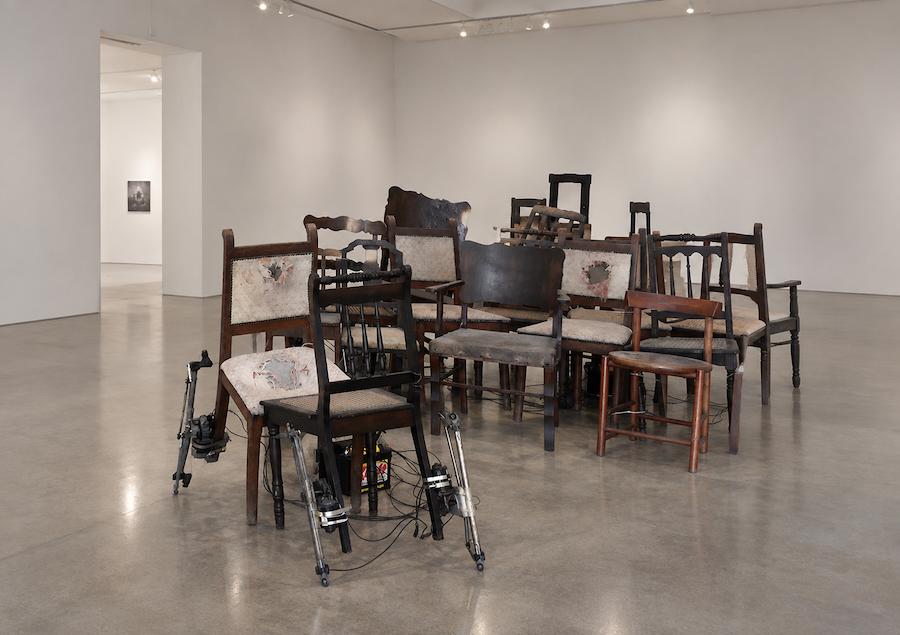
Si Sapsford draws on her history of adapting and animating household objects to create sculptural metaphors for human situations and conditions, and on her early experiences as a long-distance sailor. In Civil Unrest, Sapsford continues to explore both her fear and fascination with the change that can overtake normally civilized people, and the triggers that can make a peaceful crowd explode into something other than civilized. “I want ‘civil unrest’ to sit uncomfortably with the viewer. I think of it in quite a traumatic way because what we might think of as filmic is actually happening in reality in real time. Whilst we might stand or sit or drink a double espresso, on the other side of the globe there are people being water boarded. There is somebody trying to climb a fence trying to hand their child over to safety.”
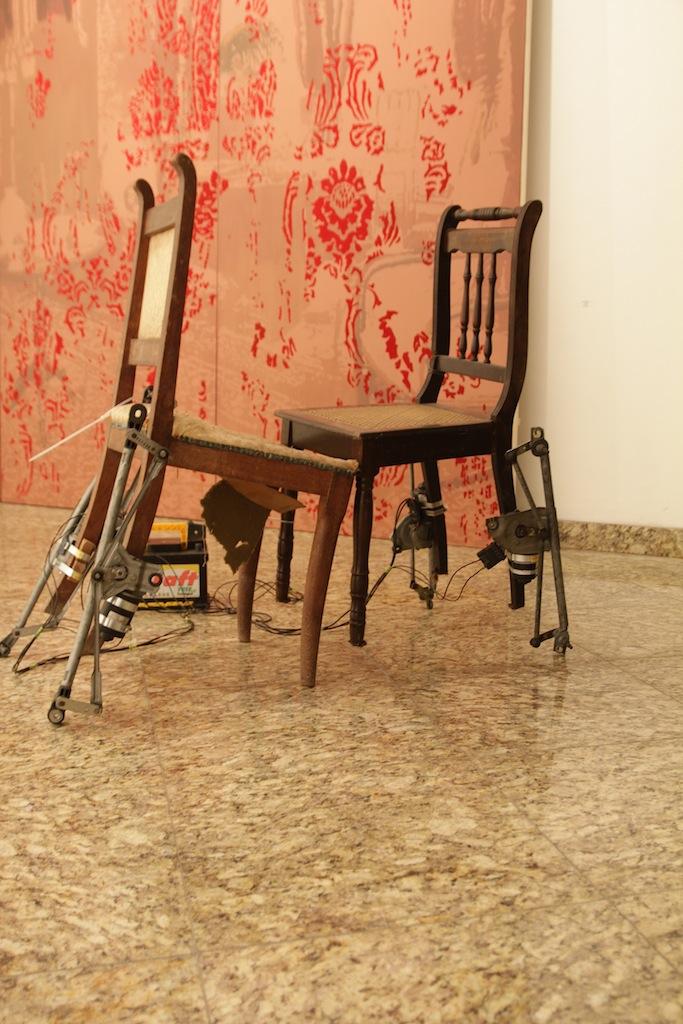
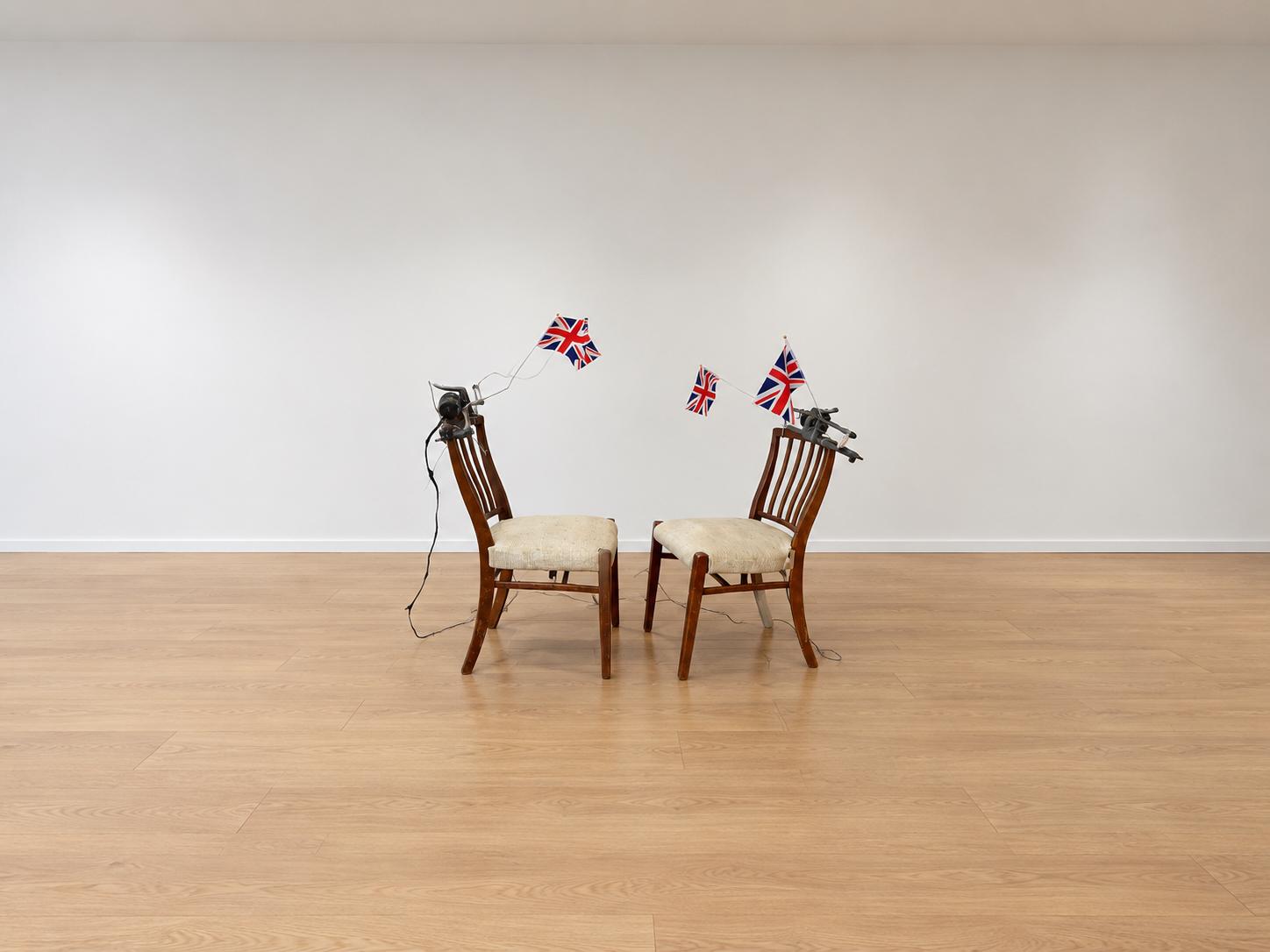
often shown with Civil Unrest, but also shown as a separate work - 2024 antimonumental exhibition at Thameside studios - 2 chairs pushing against each other making no headway but refusing to give up. The motors attached to the legs raising the chairs up giving a stiff mechanical formality to the piece belied by the reference to callipers, bullish and aggressive yet strangely impotent.
In Paradisum is an artist film by Si Sapsford exploring memory, perseverance and the passage of time. As a young boy runs in circles through deep snow, repeatedly slipping and falling before struggling on, in the background fragments of music played by the artists mother as she struggles to remember music learnt in childhood—hesitant melodies interrupted by forgetting. Separated by age yet connected through experience, both become quiet studies of persistence. One struggles physically, the other through memory. Together they reflect on the fragility of recollection, the passing of time and the resilience that accompanies different stages of life. In Paradisum forms part of an ongoing body of work exploring memory, perception and the human condition through sculpture, moving image and installation.
Everything is So Great - the state of things presents a quietly absurd tableau: two empty chairs face each other, mechanically waving Union Jack flags in a ritual of mutual display. Stripped of human presence, the gesture becomes hollow — patriotism performed without an audience, dialogue without voices. The work explores the circular nature of political signalling, where symbols are repeatedly displayed but meaning can stall. The familiar domestic chairs become participants in a choreographed performance of national identity, bringing politics into an everyday space.
Created during a residency at Cité Internationale des Arts in Paris, Time Clips the Wings of Love emerged after Si Sapsford heard a pianist perform the piece in the concert hall beneath the studios. The image is cinematic and deeply familiar: a woman at a dressing table in fading light, suspended in the moment before a first dance. Skirted in yellow organza, the dressing table becomes both object and body—holding anticipation, desire, and the fragile intensity of memory.Moving in rhythm with the music, the sculpture accelerates and slows, mirroring the unstable nature of recollection itself. An angled mirror reflects the viewer back into the work, collapsing the boundary between observer and memory. The title references Anthony van Dyck’s Time Clipping the Wings of Cupid, encountered in Paris on the same day. In the painting, Father Time severs Cupid’s wings, grounding love and undoing its illusion of permanence.The work explores unstable boundaries between memory and presence, intimacy and performance, romance and loss. It holds the tension between the glamour of desire and the quiet erosion that follows. That erosion is echoed in the gradual degradation of the original video footage, where time becomes not simply a subject but an active material within the work.
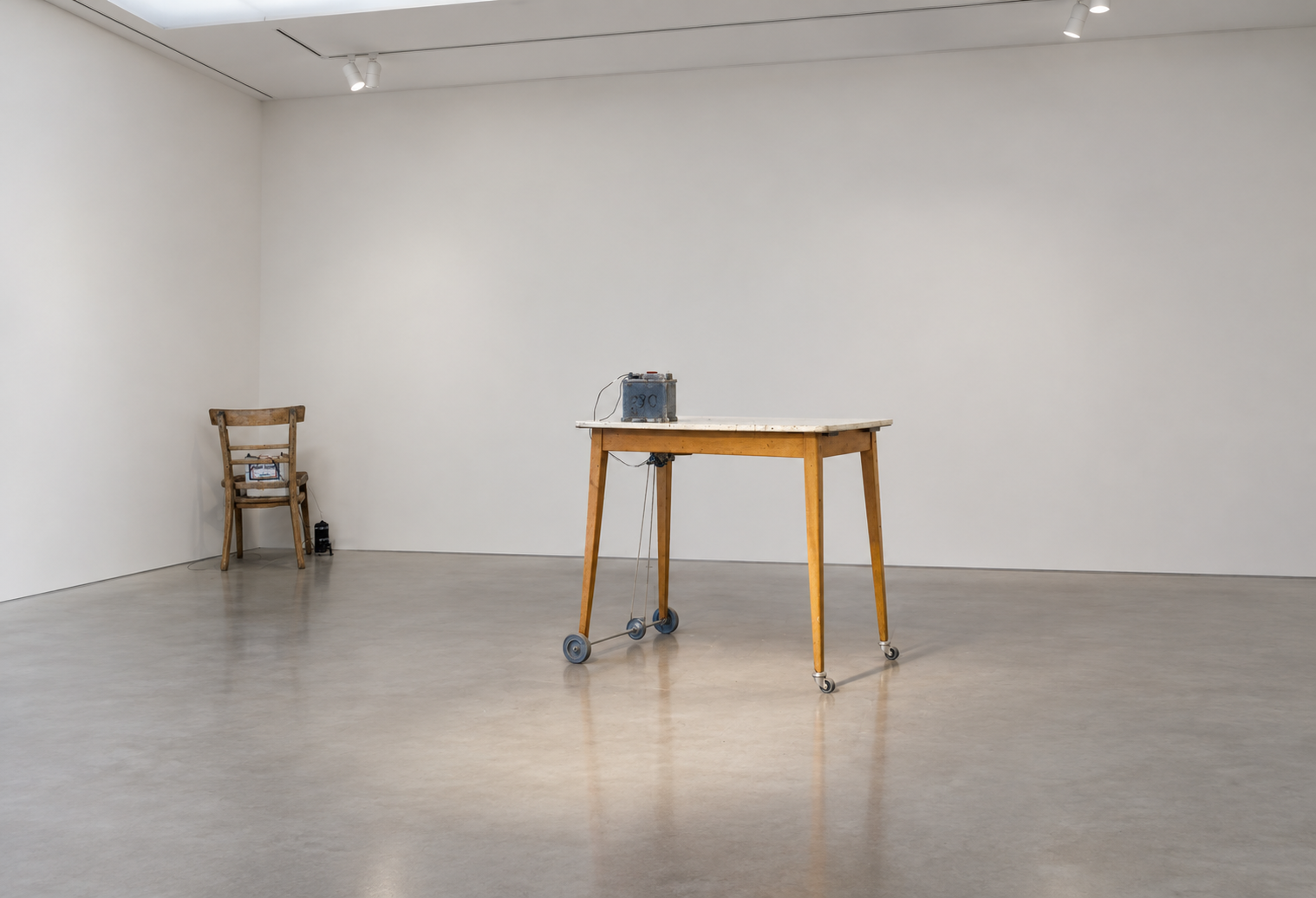
Heavy Duty is a kinetic installation An old Formica table lies on its back, its legs raised into the air. Powered by a car battery, it rocks and flails, its drop-down side flaps rising and falling as if waving for help. Slowly, one by one, the legs fall away. The familiar domestic object becomes unexpectedly vulnerable: exposed, helpless and struggling beneath the viewer’s gaze. Designed for everyday service, the table is transformed into something bodily, comic and uncomfortable. The work explores the unstable boundaries between the domestic and the bodily, service and vulnerability, familiarity and threat. Sexual vulnerability and domestic servitude are present without being explicitly named.
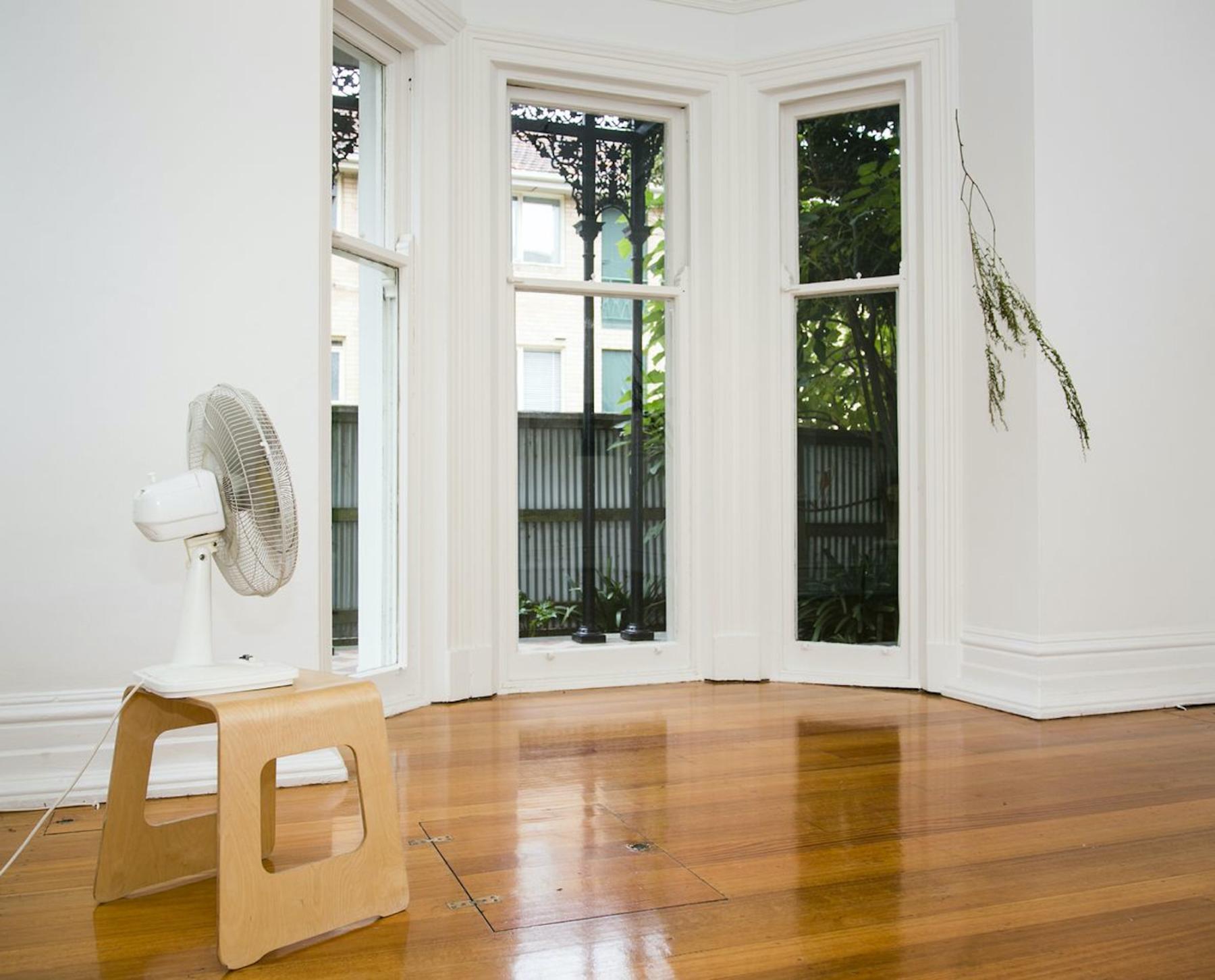
After the Deluge is a kinetic sculpture by Si Sapsford exploring renewal, survival and the fragile balance between destruction and recovery. Through mechanical movement and familiar objects, the work reflects on what remains after catastrophe and the possibility of rebuilding. Rather than illustrating a single narrative, After the Deluge invites viewers to construct their own meanings. Movement becomes a metaphor for persistence and change, transforming everyday materials into a quiet reflection on resilience, memory and the human condition. This work forms part of an ongoing series of kinetic sculptures that explore perception, movement and our relationship with ordinary objects.
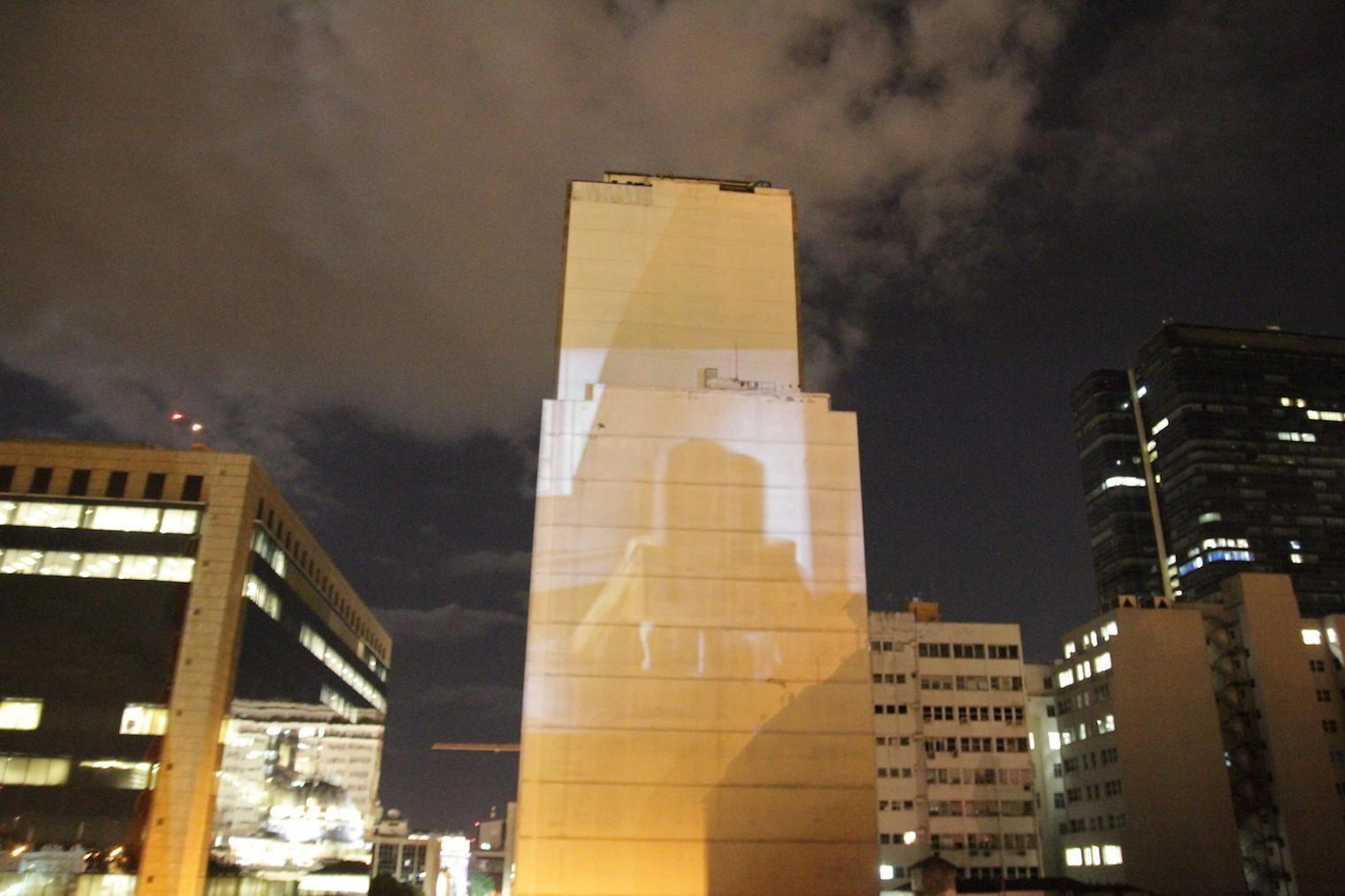
Night Swim is a short moving-image work exploring water as both a physical and psychological space. Hovering between stillness and movement, the film reflects on transition, memory and the uncertain threshold between safety and vulnerability. Water becomes a metaphor for change, inviting the viewer into a contemplative space where the familiar begins to shift.